
Nitric Oxide — Your Body’s Molecular Power Switch
Nitric oxide (NO) is a gasotransmitter that directs blood flow, cellular energy, and communication across nearly every tissue in the human body 1, 2.
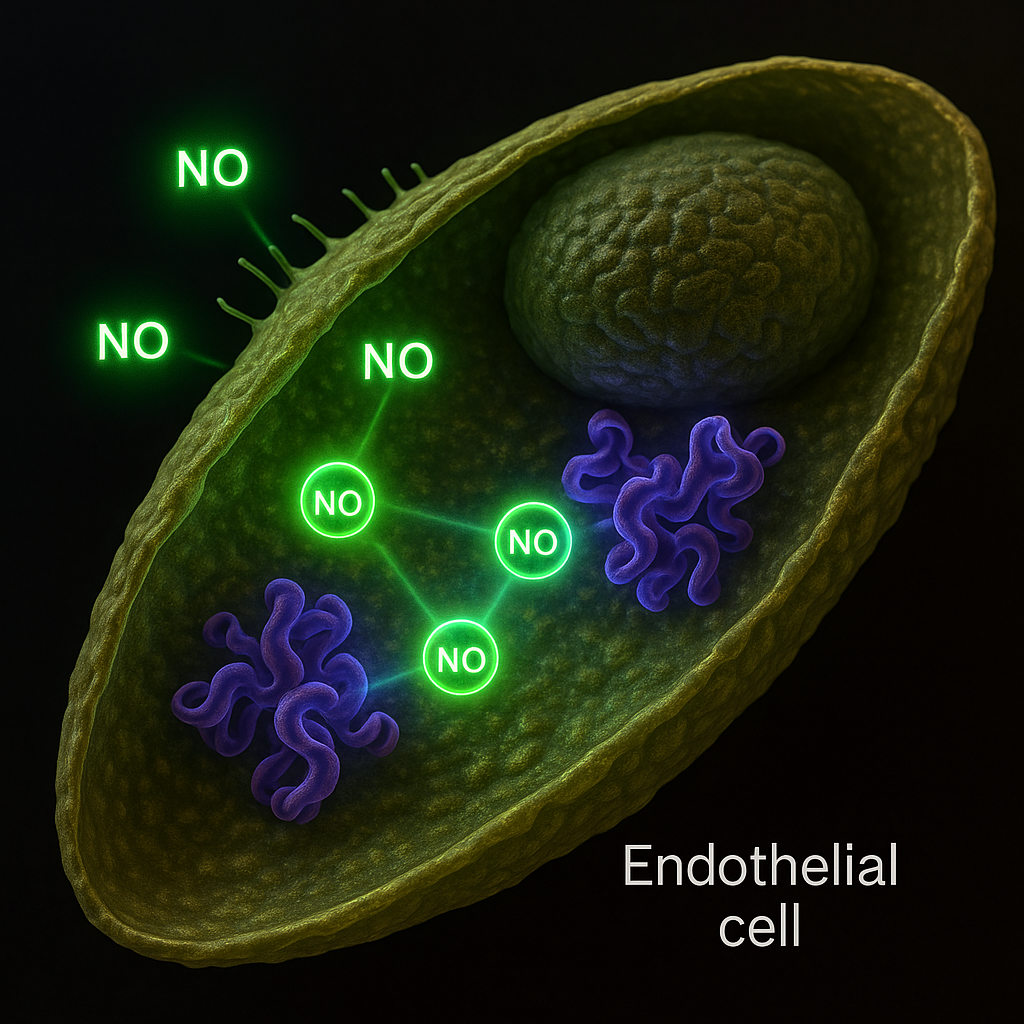
It is synthesized from L-arginine by endothelial nitric oxide synthase (eNOS) and immediately diffuses through vessel walls to trigger vasodilation 3.
When nitric oxide is abundant, arteries relax, oxygen delivery rises, and mitochondria perform more efficiently 4.
When it is low, circulation stagnates, blood pressure climbs, and cognition dulls.
Primary physiological roles
-
Vascular regulation: NO relaxes smooth muscle, lowering vascular resistance 5.
-
Neurotransmission: acts as a neural messenger in memory and learning 6.
-
Immunity and repair: regulates macrophage response and tissue healing 7.
-
Mitochondrial efficiency: optimizes ATP output and limits oxidative stress 8.

Cold Exposure and Endothelial Adaptation
Cold exposure acts as a controlled vascular stressor. When skin temperature falls, peripheral vessels constrict to conserve heat. During re-warming, those same vessels reopen through reactive vasodilation, a process strongly mediated by nitric oxide 9.
Repeated short bouts of cold followed by recovery train this vascular elasticity, enhancing the endothelium’s capacity to release nitric oxide and improving cardiovascular responsiveness 10.
Key mechanisms
- Endothelial Nitric Oxide Synthase (eNOS) Activation: Cold triggers eNOS up-regulation within endothelial cells 11.
- Brown Adipose Tissue (BAT) Thermogenesis: BAT activity during cold thermogenesis elevates eNOS expression 12.
- Shear Stress Rebound: Upon re-warming, increased blood flow across vessel walls further stimulates nitric oxide release 13.
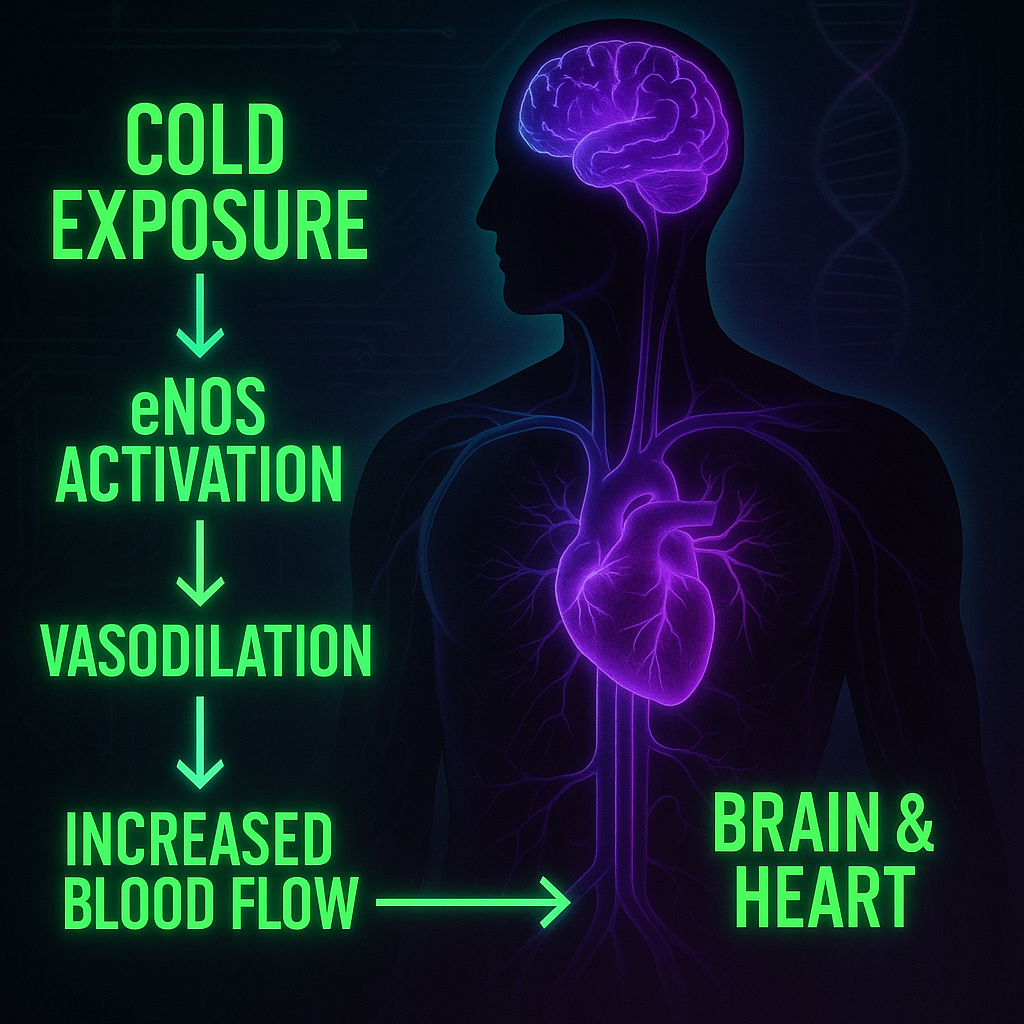
The Biochemical Cascade from Cold to Flow
Phase, Dominant, Process, Result
Cooling Vasoconstriction → redistribution of blood Heat conservation
Re-warming eNOS activation → NO release Vasodilation and oxygenation
Adaptation Hormetic stress → BAT activation Elevated baseline NO and arterial elasticity
This cyclical contraction and expansion condition the vascular endothelium, a single-cell lining responsible for producing over 90 percent of circulating nitric oxide 14.
With regular exposure, that lining becomes more reactive, resilient, and efficient at maintaining blood flow.
Evidence from Recent Studies
- Brown fat and eNOS: Cold activation of BAT elevates eNOS mRNA and nitric oxide signalling 15.
- Vascular elasticity: Short-term cold immersion improves arterial compliance and flow-mediated dilation 16.
- Thermoregulatory role: Nitric oxide mediates local vasodilation during repeated cold challenges 17.
- Cryotherapy outcomes: Regular cryotherapy sessions elevate plasma NO metabolites and reduce oxidative markers 18.
- Cognitive benefits: Higher NO bioavailability correlates with improved cerebral blood flow and attention 19.
Together, these studies reveal a consistent pattern: controlled cold exposure enhances vascular adaptability through nitric oxide–dependent pathways, supporting cardiovascular, muscular, and cognitive performance.

The Neurovascular Edge
Enhanced nitric oxide from cold exposure supports cerebral perfusion, mental clarity, and recovery capacity 19, 20.
Cold also increases norepinephrine and dopamine, amplifying alertness, while NO maintains balanced vascular tone 21.
The result is a dual effect—heightened energy with physiological calm.
Summary — The Science Circuit
Mechanism Outcome
eNOS activation + BAT thermogenesis Sustained nitric oxide production
Reactive vasodilation, enhanced circulation, and arterial elasticity
NO → mitochondrial support Greater energy and recovery
NO → neurovascular coupling Sharper focus and mental resilience
Cold exposure does more than toughen willpower.
It conditions the circulatory system to produce and utilize nitric oxide efficiently—transforming stress into performance.
The Five-Step Nitric Oxide Protocol
The Purpose of the Ritual
Cold exposure builds resilience, but its full benefits emerge when combined with targeted breathing, proper nutrition, adequate sunlight, and daily consistency.
The following five-step ritual integrates these elements to elevate nitric-oxide bioavailability, stabilize blood pressure, and improve both vascular and brain performance 1, 2.
Step 1 — Optimized Breathing: Activate Endogenous Nitric Oxide
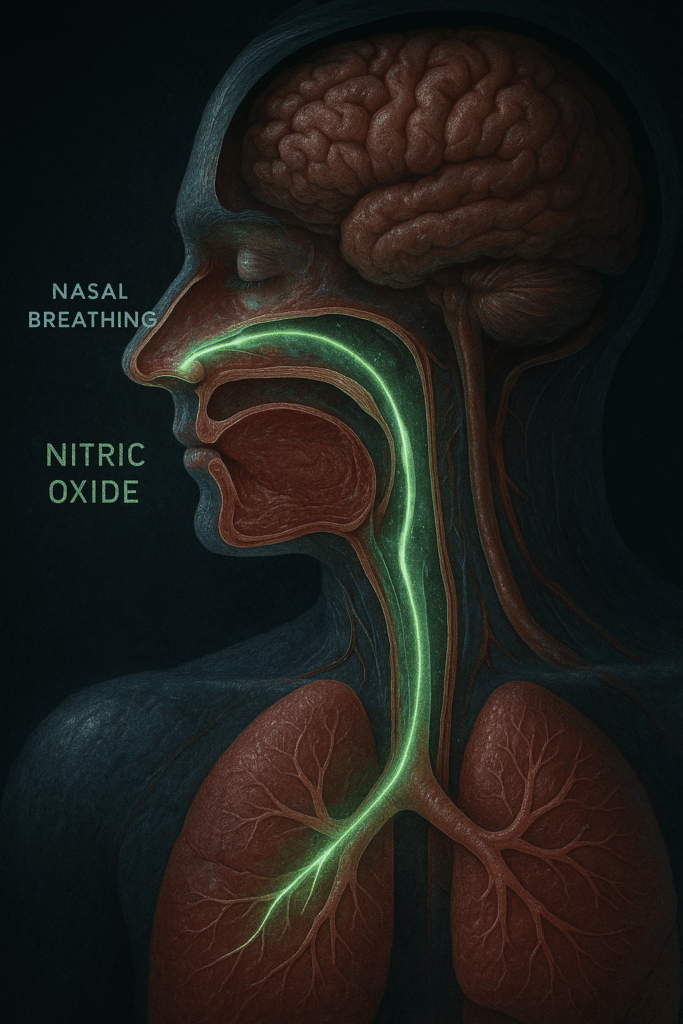
Nasal breathing naturally generates nitric oxide in the paranasal sinuses, which then diffuses into the lungs and bloodstream 3.
Breathing through the nose rather than the mouth maintains airway resistance, balances oxygen–carbon dioxide ratios, and sustains nitric oxide synthesis 4.
Technique:
- Inhale slowly through the nose for 4 seconds.
- Hold 2–3 seconds.
- Exhale through the nose for 6–8 seconds.
- Repeat 5–10 cycles before or after cold exposure.
Physiological effect: controlled breath retention briefly lowers oxygen tension, triggering eNOS activation and vascular relaxation 5.
Step 2 — Dietary Support: Feed the Pathway
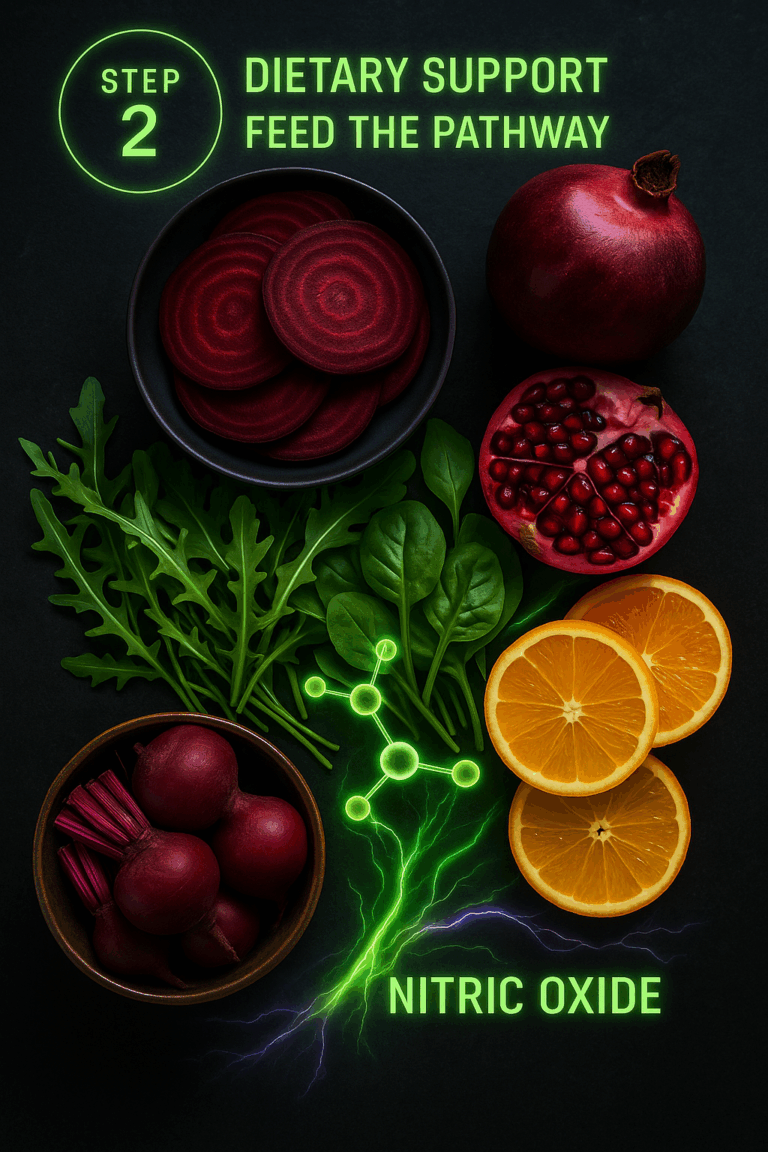
Dietary nitrates and cofactors sustain nitric-oxide synthesis beyond what breathing or cold exposure alone can achieve.
Key food groups:
- Leafy greens: spinach, kale, arugula, beet greens 6.
- Root vegetables: beets and radishes, rich in nitrate anions 7.
- Citrus, kiwi, and berries: provide vitamin C, stabilizing nitric oxide molecules 8.
- Walnuts and almonds: supply L-arginine for eNOS substrate formation 9.
Supplemental options: L-citrulline and beet-root powder may enhance plasma nitrite levels and endurance 10.
Step 3 — Strategic Sunlight: Skin-Mediated Nitric Oxide Release
Ultraviolet-A (UVA) radiation mobilizes nitric oxide stored in dermal tissues, producing immediate vasodilation and blood pressure reduction 11.
Morning or late-afternoon light minimizes UVB damage while providing sufficient UVA exposure.
Protocol:
Expose arms, neck, and face for 10–15 minutes daily without sunscreen, when the UV index is < 3.
Avoid midday intensity to prevent oxidative stress.

Step 4 — Progressive Cold Exposure: Train the Vascular Reflex
Beginner protocol:
- Finish your shower with 30 seconds of cold water at 15–18 °C.
- Over 2–3 weeks, extend to 60 seconds and reduce to 12–14 °C.
Advanced protocol:
- 3–5 minutes in 10–12 °C water or 2 minutes in an ice bath, 3× per week 12.
Cold exposure stimulates sympathetic activation, followed by nitric-oxide-mediated vasodilation during re-warming 13.
This alternation improves endothelial responsiveness and thermogenic capacity.
Physiological outcomes:

Step 5 — Consistency and Tracking
Physiological change depends on repetition.
Sustained nitric-oxide elevation requires ongoing stimulation of the eNOS pathway and monitoring of measurable markers 17.
Monitor:
- Resting blood pressure: gradual normalization indicates improved vascular tone.
- Heart-rate variability (HRV): increased variability suggests better autonomic balance.
- Subjective metrics: energy stability, mental clarity, and faster recovery after exertion.
Tracking tools, such as wearable sensors for HRV and morning blood-pressure logs, help quantify adaptation.

Safety and Progressive Conditioning
Individuals with cardiovascular disease, uncontrolled hypertension, Raynaud’s phenomenon, or neuropathy should consult a clinician before cold immersion 18.
Start with mild exposure, avoid breath-holding underwater, and discontinue if severe numbness or dizziness occurs.
Recognize thresholds:
- Typical response: brief shiver, mild tingling, rapid recovery.
- Warning signs: chest tightness, limb pain, or prolonged numbness.
Summary Table
Step Method Primary Benefit
1. Breathing Nasal and breath-hold training Endogenous nitric oxide synthesis
2. Diet Nitrate-rich vegetables and cofactors Sustained NO production
3. Sunlight Controlled UVA exposure: Dermal nitric oxide release
4. Cold Exposure Gradual immersion or shower protocol Vascular reactivity and resilience
5. Consistency, Daily tracking, and adaptation: Long-term endothelial health
Integration with the Cortex Cannibal Ecosystem
Combine this circulation ritual with your existing protocols:
- Morning: nasal breathing + brief cold shower → nitric-oxide surge.
- Midday: nitrate-rich meal + sunlight exposure.
- Evening: magnesium or adaptogenic tea (see Nighttime Adaptogen Tea Blog) for vascular recovery.
This synergy supports every layer of the Cortex Cannibal framework: mitochondrial output, glymphatic flow, stress modulation, and brain clarity.
Internal Links
- Cortisol Reset Cheat Sheet
- Mitochondria & Brain Energy Blog
- Sleep & Glymphatic Flow Blog
- Fermented Foods & Brain Health
Affiliate Disclosure: This article may reference third-party adaptogen, nitric-oxide, or recovery products. Purchases made through these links support the continued development of functional-medicine content.
Medical Disclaimer: Educational content only. Not a substitute for medical advice, diagnosis, or treatment. Always consult a qualified health professional before adopting any new wellness protocol or supplement.
Join the Ritual:
Download the free Cortex Cannibal Circulation Protocol Cheat Sheet — your visual guide to breathing, diet, sunlight, and cold exposure for nitric-oxide mastery.