
You wake up wired, but not awake.
The light stings. Your brain feels thick. Coffee hits the tongue, but never the neurons.
This isn’t just a case of feeling lazy. It’s a serious issue of cortisol distortion — your survival hormone is running on a broken circuit, leading to significant consequences.
The same chemical that kept your ancestors alive in the wild now floods your body 24/7 under blue light, inbox alerts, and emotional noise.
Modern stress, unlike the immediate threats our ancestors faced, doesn’t kill fast. Instead, it slowly corrodes our bodies and minds, leading to serious and potentially life-altering health issues.
It steals clarity, melts energy, and turns your mitochondria — the engines of thought — into smoke.
At Cortex Cannibal, we call this the Stress–Energy Connection:
The invisible system that decides if your brain fires clean or burns out.
Medical Disclaimer: This article is for educational purposes only. It is not medical advice. Always consult a qualified healthcare provider before making any changes to your diet or supplement routine.
AFFILIATE DISCLOSURE (CORTEX CANNIBAL VERSION)
Cortex Cannibal participates in affiliate programs with trusted wellness, supplement, and lifestyle brands. This means we may earn a small commission if you purchase products through our links—at no additional cost to you.
We only recommend products that meet our standards for quality, third-party testing, and ingredient transparency. All opinions expressed are independent, research-driven, and aligned with our mission to explore the gut–brain connection through functional medicine and biohacker science.
These statements have not been evaluated by the Food and Drug Administration. The information provided on this site is for educational purposes only and is not intended to diagnose, treat, cure, or prevent any disease.
THE HPA AXIS: YOUR BODY’S STRESS COMMAND CENTER
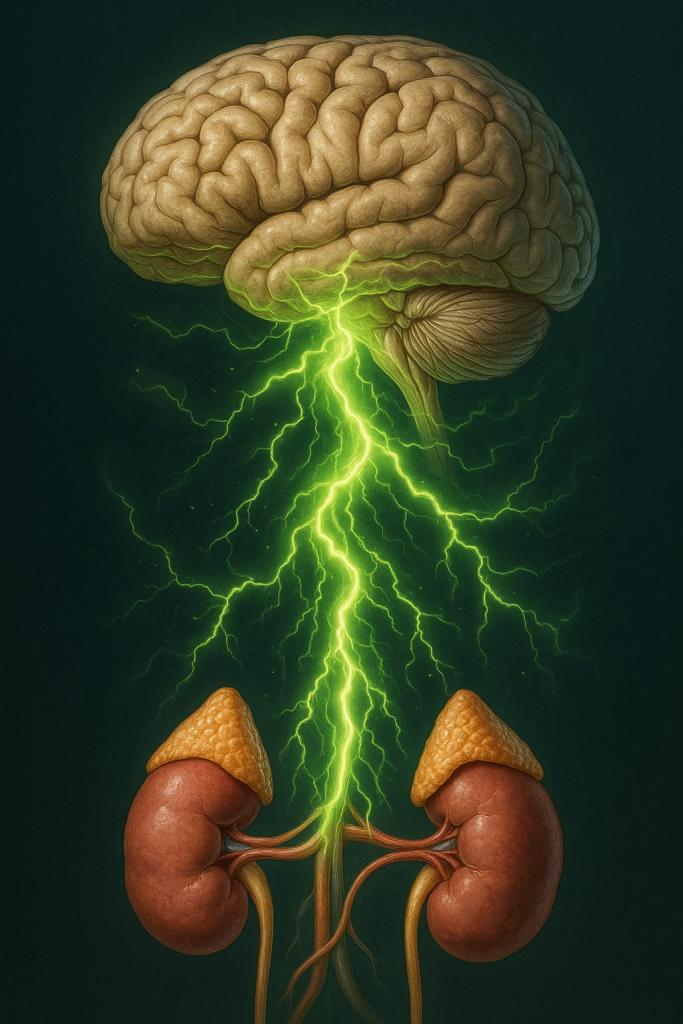
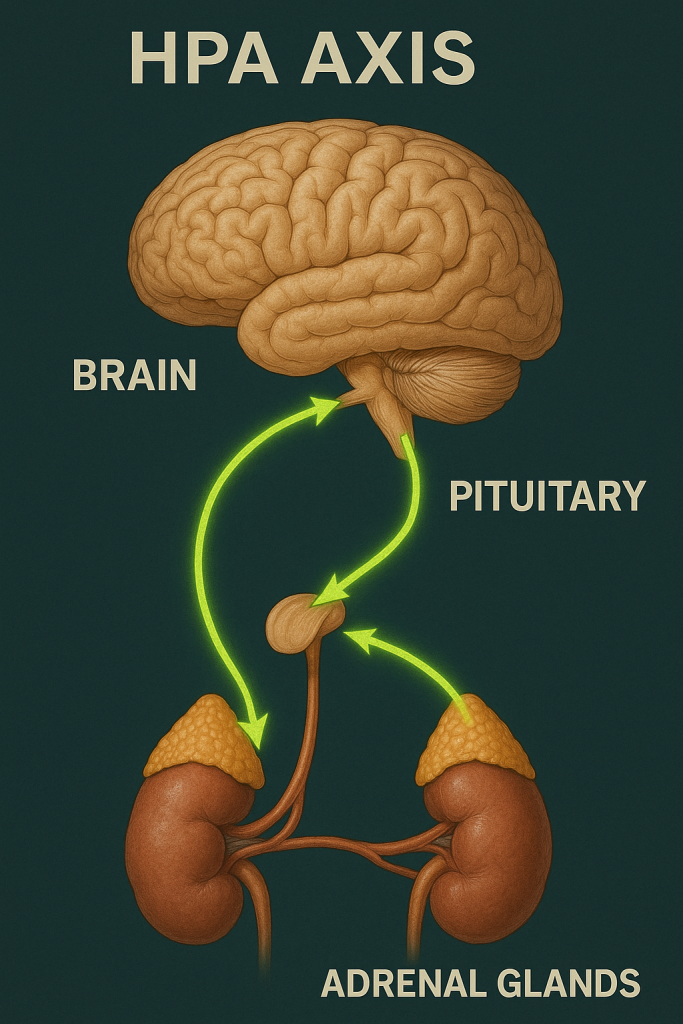
Every stressful thought triggers a cascade of chemical electricity through your HPA axis — the hypothalamic–pituitary–adrenal system.
It’s a closed-loop feedback line built for danger, not email.
- The hypothalamus senses threat and releases CRH (corticotropin-releasing hormone).
- The pituitary gland responds to ACTH, the signal that triggers the secretion of hormones.
- The adrenal glands release cortisol, your body’s biochemical fire alarm.
Cortisol floods the bloodstream, mobilizing glucose, sharpening attention, and constricting digestion. Perfect for sprinting from predators — toxic when done every morning at your desk.
In a perfect world, the signal fades. Cortisol levels drop by the afternoon, and the system resets.
But constant stress keeps the lever pulled — and that’s when the damage begins.
HORMONAL LOOP COLLAPSE
When cortisol remains high for too long, feedback inhibition breaks down.
The hypothalamus stops listening; the pituitary keeps shouting.
Adrenal output becomes chaotic — sometimes overactive, sometimes absent.
The result: HPA-axis dysregulation, also known as adrenal burnout.
Research links this loop collapse to:
- Insulin resistance and glucose swings 2
- Suppressed thyroid output
- Impaired neuroplasticity
- Sleep disruption and depression 3
Cortisol’s power isn’t just metabolic — it’s neural.
It rewires the hippocampus, your memory hub, shrinking it under sustained exposure 4.
It distorts serotonin signalling, sabotages BDNF, and exhausts your brain’s ability to adapt.
In plain terms: you stop feeling sharp. You start feeling stuck.
NEUROCHEMICAL FALLOUT
Cortisol doesn’t work alone.
It drags neurotransmitters down with it.
When chronic stress hits:
- Serotonin declines → mood dips, anxiety spikes.
- Dopamine collapses → motivation dies.
- Norepinephrine overfires → focus fragments into static.
Your brain becomes a battlefield of overstimulation and underfueling.
Glucose gets rerouted to muscles, starving neurons of oxygen and ATP.
At the cellular level, mitochondria shift from energy production to damage control 5.
They burn dirtier, release more free radicals, and trigger neuroinflammation.
That’s the biochemical face of brain fog — when mitochondrial noise drowns neural signal.
THE COGNITIVE CRASH
Brain fog isn’t a symptom — it’s a status report.
It tells you your metabolic software is glitching.
Cortisol dulls glucose transport to the brain, leading to mid-morning crashes and afternoon yawns.
Combine that with caffeine dependency, skipped meals, and disrupted sleep, and you’ve built the perfect bioelectric storm.
Studies show that individuals with high cortisol patterns exhibit:
- Slower reaction times and poorer memory recall 6
- Reduced prefrontal cortex activity (the logic center)
- Altered gut microbiome diversity (yes — stress reaches your microbes) 7
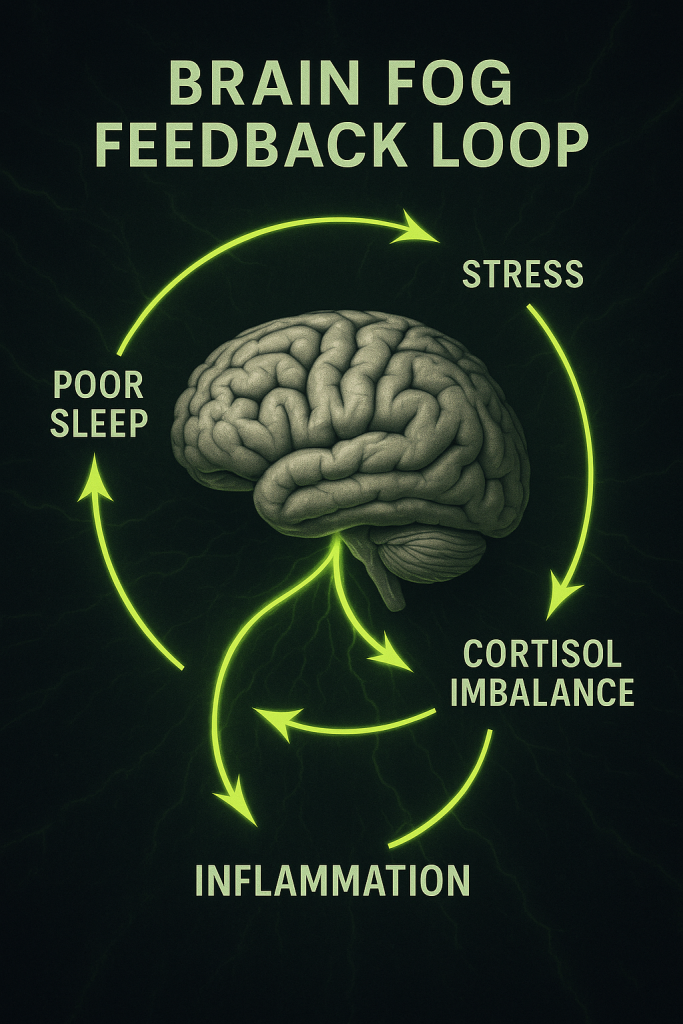
The loop tightens: cortisol spikes → brain fog → frustration → more cortisol.
That cycle can last years unless you cut the circuit and retrain the axis.
THE MORNING SPIKE: WHY IT MATTERS
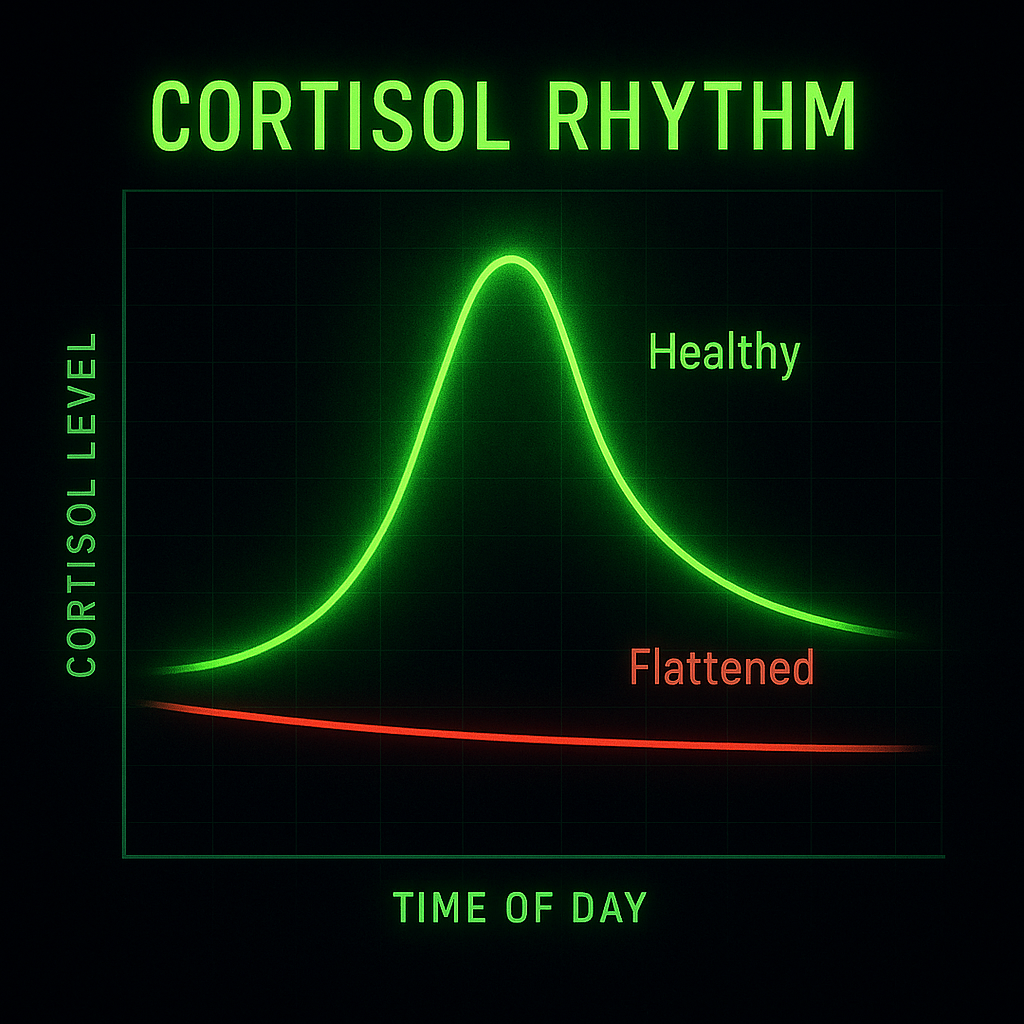
Cortisol isn’t evil — it’s rhythm.
You need it to rise in the morning, spike for focus, and fall by nightfall.
The Cortisol Awakening Response (CAR) plays a crucial role in mobilizing energy. Understanding and managing this response is key to reclaiming your energy and focus.
However, exposure to blue light, late-night eating, and inconsistent sleep schedules can flatten this curve.
When your cortisol spike shifts later into the day, it hijacks melatonin release — you stay alert at night and foggy in daylight.
That’s when burnout transforms into metabolic jet lag: your body clock is running east, while your brain is still west.
To repair it, you need timing — light, movement, food, and breath aligned with your circadian programming. These are practical steps you can take to regain control.
CORTISOL BIOLOGY 101: FROM CHOLESTEROL TO CHAOS
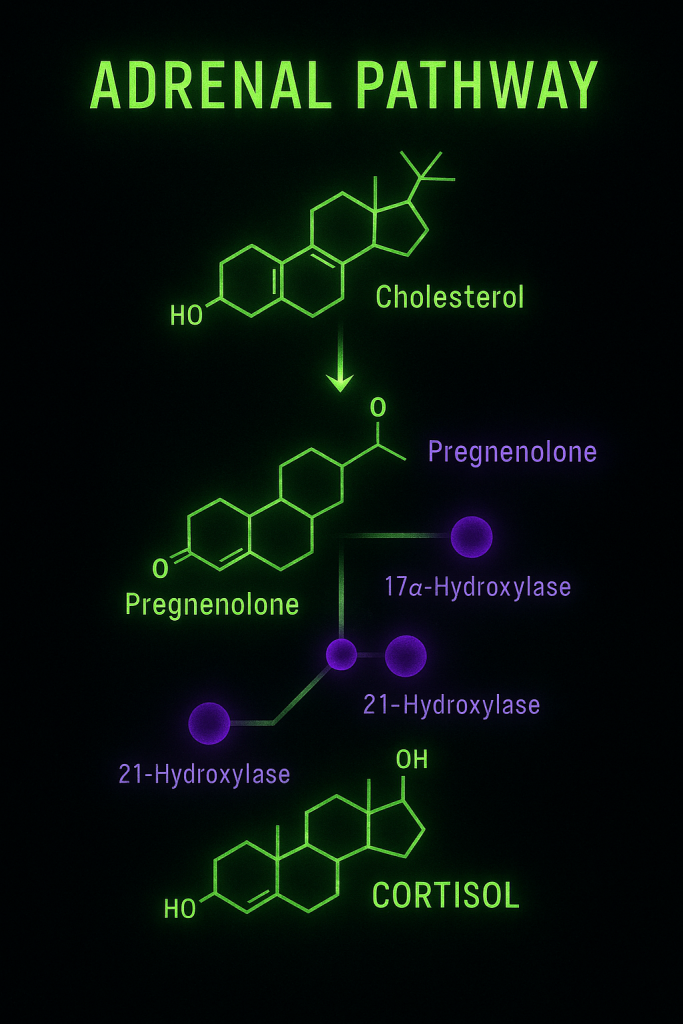
Every molecule of cortisol begins as cholesterol in your adrenal cortex.
Converted through a cascade (cholesterol → pregnenolone → progesterone → cortisol), it’s designed for bursts, not floodlights.
Cortisol binds to glucocorticoid receptors (GR) and mineralocorticoid receptors (MR) throughout the brain and body.
Short-term binding sharpens; chronic binding damages.
Long exposure desensitizes GR receptors — the body stops listening, forcing more cortisol release.
This is the molecular root of burnout: receptor resistance.
You can’t supplement your way out of receptor fatigue.
You have to earn sensitivity back through rhythm, nutrient restoration, and recovery.
THE RITUALS: HOW TO REWIRE THE CIRCUIT
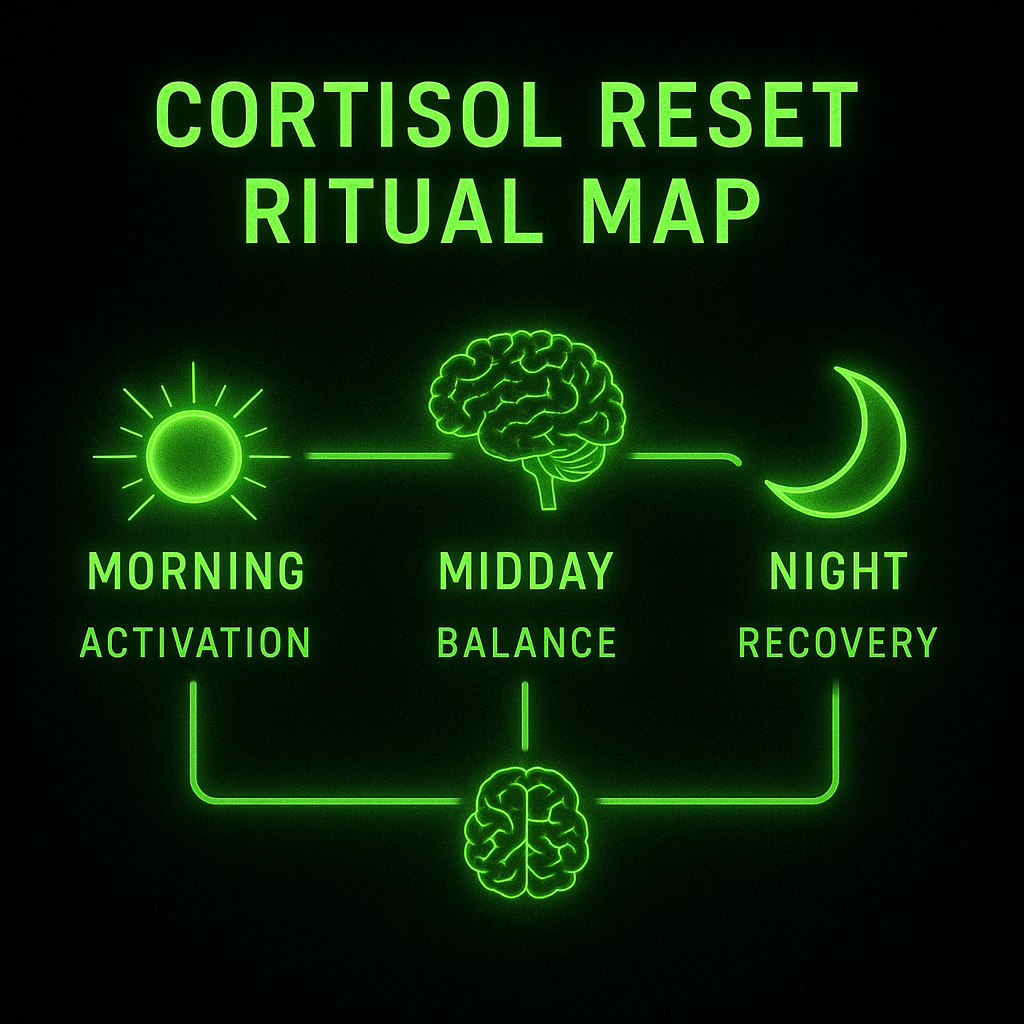
Rebuilding the stress–energy loop isn’t about supplements first — it’s about resetting rhythm.
Your HPA axis listens to light, breath, movement, and fuel long before it listens to capsules.
MORNING — THE RESET
1. Hydration + Sunlight + Breath
Within five minutes of waking, hydrate with 500 ml filtered water and step into natural light for 5–10 minutes.
Inhale for 4, hold 4, exhale 6 — slow breathing activates the vagus nerve, lowering cortisol output.
2. Fuel the Spike (Don’t Skip Breakfast)
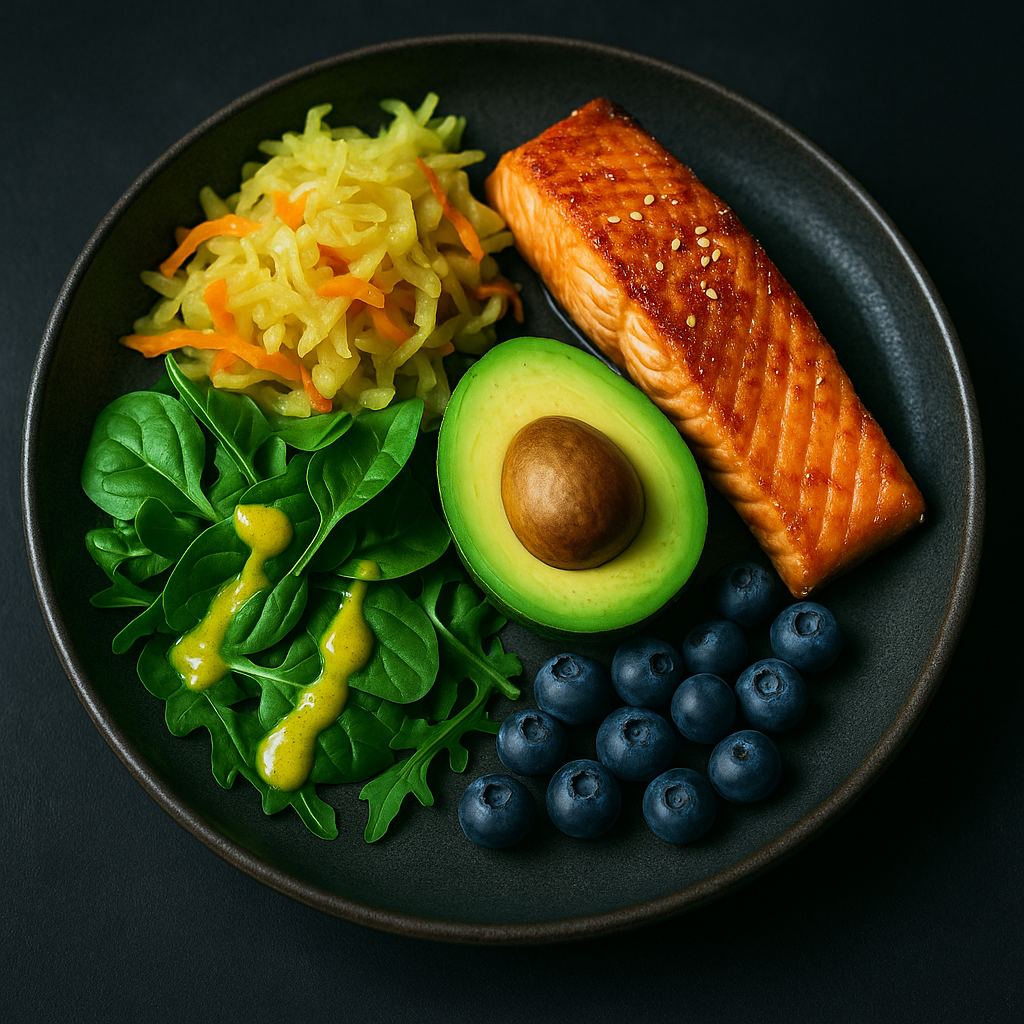
A small, protein- and fibre-rich meal (e.g., eggs, spinach, and avocado) helps stabilize glucose levels and prevent a mid-morning cortisol rebound.
Medical Disclaimer: If you’re practicing intermittent fasting, reintroduce morning meals gradually; sudden schedule changes can further stress the HPA axis.
MIDDAY — THE CORTISOL COCKTAIL
The Stack:
- Ashwagandha (KSM-66) — clinically shown to reduce cortisol 10.
- Rhodiola rosea — increases stress resilience and mitochondrial endurance.
- Magnesium L-Threonate (try Cymbiotika® Magnesium Complex) — supports neuronal recovery.
- Omega-3 EPA/DHA — dampens inflammation.
- Probiotic Support (e.g., Just Thrive®, Seed Synbiotic) — stabilizes gut–brain feedback 7.
Blend these into your midday ritual: a 10-minute walk, exposure to sunlight, and deep diaphragmatic breathing.
Each reduces sympathetic dominance — the engine of excess cortisol.
Affiliate Disclosure: Cortex Cannibal may earn from qualifying purchases at no additional cost. Only verified, third-party-tested brands are featured.
EVENING — THE CORTISOL RESET RITUAL
1. Dimming the Signal
Two hours before bed, lower lights below eye level. Avoid screens or use violet-green night filters to align melatonin release.
2. Adaptogenic Night Tea
Brew lemon balm + L-theanine + chamomile (see Nighttime Adaptogen Tea Blog).
This blend calms glutamate activity, soothing the HPA axis 11.
3. Movement for Drainage
Gentle stretching or a 20-minute walk encourages glymphatic and lymphatic flow 12.
FUNCTIONAL RECOVERY: FUEL FOR RESILIENCE
Cortisol recovery isn’t just about reducing stress — it’s about utilizing better substrates.
Macronutrient Rhythm
- Protein: 1.2 – 1.6 g/kg daily → supports neurotransmitter synthesis.
- Carbs: focus on resistant starch + whole grains → steady glucose.
- Fats: prioritize omega-3 + MCT → support mitochondrial membranes.
Micronutrient Allies
- Vitamin B5 & B6: cofactors for adrenal hormone production 13.
- Vitamin C: burned rapidly during stress; replenishes adrenal reserves.
- Magnesium: required for over 300 stress-related enzymatic reactions.
Gut Reconstruction
The gut microbiome regulates cortisol metabolism via the gut–brain axis.
Fermented foods (kefir, kimchi, sauerkraut) and polyphenols (blueberries, cacao) reduce systemic inflammation 14.
FAQ: CORTISOL, STRESS & ENERGY
Q1: Can I eliminate cortisol?
No. You need it. Cortisol is the gas pedal of wakefulness. The goal is balance — a morning surge and an evening drop.
Q2: How long to feel better after resetting the HPA axis?
Typically, 2–6 weeks of consistent sleep timing, breathwork, and a balanced diet result in noticeable improvements. Complete receptor sensitivity may take months.
Q3: Can adaptogens replace medication?
No. They are adjuncts, not replacements. Always discuss with a licensed professional, especially if on SSRIs or thyroid meds.
CAUTION / MEDICAL DISCLAIMER
If you have adrenal disease, autoimmune conditions, or are pregnant, seek clinical guidance before using adaptogens or fasting protocols.
Chronic fatigue, severe insomnia, or anxiety may require medical evaluation to rule out Cushing’s, Addison’s, or thyroid disorders.
This information is educational and should not be used as a substitute for personalized care.
THE BRAIN FUEL SUMMARY
- Cortisol is your energy thermostat — too low, you collapse; too high, you corrode.
- Chronic stress flattens your circadian curve and starves mitochondria.
- Nutrition, light exposure, breathwork, and sleep timing are the core controls.
- Adaptogens and probiotics can amplify resilience when the foundation is strong.
- Rhythm = power → Power = clarity.
REFERENCES
- PubMed – Breakfast and Cortisol Rhythms (2017): https://pubmed.ncbi.nlm.nih.gov/28241242/
- PubMed – Ashwagandha and Stress Reduction (2012): https://pubmed.ncbi.nlm.nih.gov/23439798/
- PubMed – Lemon Balm and Anxiety (2016): https://pubmed.ncbi.nlm.nih.gov/28066135/
- PubMed – Glymphatic System and Sleep (2019): https://pubmed.ncbi.nlm.nih.gov/30660194/
- PubMed – Vitamin B and Adrenal Support (2019): https://pubmed.ncbi.nlm.nih.gov/31854609/
- Frontiers in Neuroscience – Gut Microbiota and Brain Health (2018): https://www.frontiersin.org/articles/10.3389/fnins.2018.00904/full
JOIN THE RITUAL
Your body isn’t burned out — it’s mis-wired.
When you restore rhythm, the fog lifts and clarity returns.
→ Download the free Cortisol Reset Cheat Sheet to map your daily stress rhythm.
→ Subscribe to Cortex Cannibal for weekly biohacker rituals and functional nutrition intel.
Devour the Brain. Before It Devours You.
AFFILIATE DISCLOSURE (CORTEX CANNIBAL VERSION)
Cortex Cannibal participates in affiliate programs with trusted wellness, supplement, and lifestyle brands. This means we may earn a small commission if you purchase products through our links—at no additional cost to you.
We only recommend products that meet our standards for quality, third-party testing, and ingredient transparency. All opinions expressed are independent, research-driven, and aligned with our mission to explore the gut–brain connection through functional medicine and biohacker science.
These statements have not been evaluated by the Food and Drug Administration. The information provided on this site is for educational purposes only and is not intended to diagnose, treat, cure, or prevent any disease.