
Cortex Cannibal · Brain & Behavior
The Message You Keep Meaning to Reply To
You meant to answer properly.
Now it’s been a week.
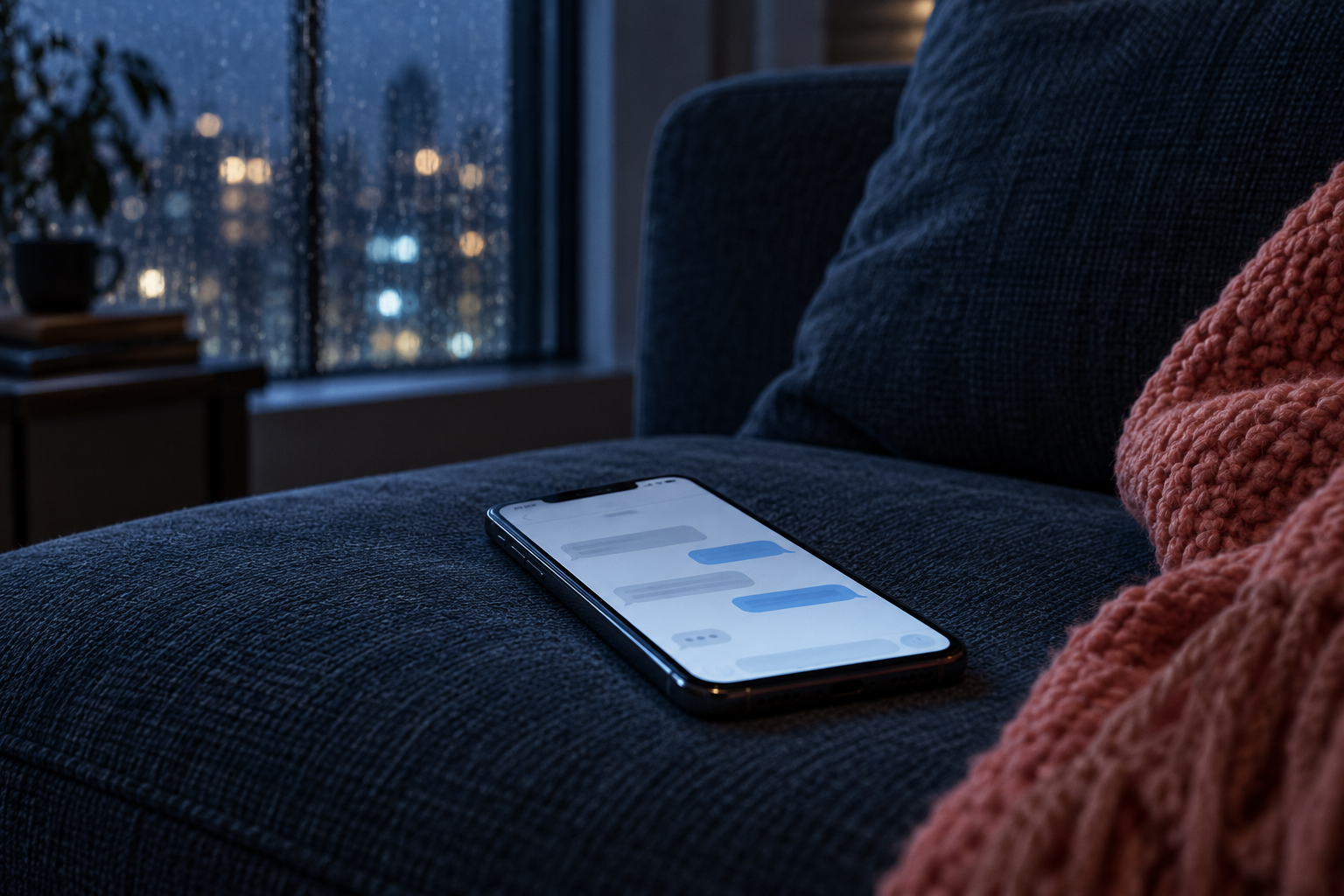
Have you ever waited so long to reply to a message that now you feel like you need to explain yourself? You read it, thought “I’ll answer when I have a minute,” and carried on with your day. You wanted to give them a proper reply. Now it’s Thursday, they messaged on Sunday, and you’ve thought about answering fourteen times without actually doing it.
The ridiculous part is that you might be genuinely happy to hear from them. You want to know how the appointment went, whether they got the job, or when you can finally get together. But somewhere between reading their message and finding a quiet moment, replying became something you were putting off. Now every time you open the conversation, you’re also deciding whether to apologize, explain the delay, or pretend you haven’t just spent four days making a simple exchange unnecessarily awkward.
Meanwhile, they can see you shared a video of a raccoon eating grapes. So that’s helpful.
Why do we put off replying to messages we actually want to answer? There isn’t one explanation, but two useful places to look are how we remember intentions and how we respond to an uncomfortable task.
“I’ll reply later” leaves a lot to chance
Reading a message, deciding to answer, and remembering to do it later are separate steps. That last part involves prospective memory: remembering to carry out an intention at the appropriate moment. Remembering what someone said isn’t quite the same job as remembering to respond after dinner.[1]
Across four online experiments involving 1,196 participants, psychologist Sam Gilbert examined delayed intentions and the use of external reminders. Reminders improved performance on the experimental tasks. Participants also used them more when they had more intentions to remember or encountered interruptions.[1]
These were experiments about remembering future actions, rather than studies of unanswered texts. Still, they offer a useful way to understand the gap between “I meant to” and actually doing it.
Perhaps you remember while driving, in the shower, or halfway through something you can’t stop. By the time you sit down, the message has slipped out of mind again. You remembered it several times, just never when remembering was particularly useful.
If forgetting is the problem, you could try a specific reminder: “Reply to Jo after dinner.” Choose a cue for a time when you can act on it.
Sometimes you remember and still don’t answer
Of course, there’s another version of this. You know exactly which message is waiting. You’ve opened it twice today and somehow ended up checking the weather.
One prominent explanation of procrastination focuses on immediate emotional relief. Avoiding an uncomfortable task can make the present moment feel easier, even when postponing it creates problems later. Psychologist Fuschia Sirois’s conceptual review explores this account and proposes how stressful circumstances may increase vulnerability to delay.[2]
Applied to messaging, that raises a useful question: what feels difficult about answering? The connection is an interpretation, rather than a finding that explains everyone’s texting habits.
Perhaps you don’t know what to say about difficult news. Maybe agreeing to plans means organizing childcare or admitting you’d rather stay home. A short message can contain a decision you haven’t made yet.
Or perhaps this person matters to you, and you keep waiting until you can give them your full attention. You have five distracted minutes available, but you’ve decided the reply deserves twenty peaceful ones. Unfortunately, those twenty minutes appear to be booked until March.
You were waiting until you could reply properly. Now you’re waiting until you can explain why you didn’t.
Once the silence becomes embarrassing, the task has changed. There’s the original question to answer, plus whatever you feel you need to say about the delay. Opening the conversation can bring up both at once.
The raccoon video, meanwhile, required very little thought. That doesn’t tell the person waiting how much you care about them. It also doesn’t make their frustration unreasonable. What felt complicated from your side may have looked like indifference from theirs.

A reply can be smaller than the explanation
For a safe conversation you genuinely want to continue, try letting the first message back do less.
“I’m sorry I left this sitting. I kept meaning to answer properly. How did the appointment go?”
You’ve acknowledged the delay and returned your attention to them. There’s room to explain more, but you don’t have to finish an account of your entire week before asking how theirs went.
If a message needs thought, you could acknowledge it first: “I’ve read this and want to give it some attention. Can I come back to you tomorrow?” Choose a time you can reasonably keep; another promise that hangs there may make things harder for both of you.
These are practical suggestions, not a tested treatment for messaging avoidance. The useful next step depends on the problem. A reminder may help with forgetting. If you’re unsure what someone means, a question may help. If you keep postponing the same conversation, it may be worth considering whether something in it needs to be addressed.
There’s room for responsibility without deciding you’re a terrible person. You may not have intended to hurt someone, and they may still have felt ignored. “I’m sorry I left you hanging” acknowledges that without asking them to reassure you.
You’re also allowed to be unavailable. Work, rest, caregiving, and time away from your phone belong in your life. If contact feels unsafe or unwanted, a boundary may matter more than a quicker reply.
But if there’s someone you miss on the other side of that message, you can begin with an ordinary answer. You can be a little awkward, acknowledge the gap, and still be glad to hear from each other.
Something to carry with you
Cortex Takeaway
Before calling yourself a bad friend, ask what’s getting in the way: forgetting, uncertainty, lack of time, or not wanting the conversation? Those call for different responses.
If you want to reconnect, a warm, imperfect message is a reasonable place to start. You don’t need a perfect explanation before saying hello.
A couple of quick questions
Still wondering?
Does taking ages to reply mean I don’t care?
The delay alone doesn’t tell the whole story. Consider your intentions, circumstances, and the broader relationship. Caring about someone and acknowledging the effect of repeated silence can both matter.
Does this mean I have ADHD?
An unanswered message alone cannot establish a diagnosis. If difficulties with attention, organization, or completing tasks repeatedly affect your life, discuss the wider pattern with a qualified professional.[3]
What if it’s been months?
You can send a brief, honest message without assuming the relationship will resume where it stopped. Acknowledge the gap, express your interest, and leave the other person room to decide whether they want to reconnect.
References
- Gilbert SJ. Strategic offloading of delayed intentions into the external environment. Q J Exp Psychol. 2015;68(5):971–992. doi:10.1080/17470218.2014.972963. Read the full paper. Primary human experimental research.
- Sirois FM. Procrastination and stress: a conceptual review of why context matters. Int J Environ Res Public Health. 2023;20(6):5031. doi:10.3390/ijerph20065031. Read the full paper. A conceptual review, rather than a study of personal messaging.
- National Institute of Mental Health. Attention-Deficit/Hyperactivity Disorder: What You Need to Know. Read the clinical information. Official information on diagnosis and assessment.
This article provides general education, not a diagnosis or individual treatment advice. Messaging examples and practical suggestions are illustrative. The pull quote is original Cortex Cannibal writing.
A little further down the rabbit hole
Read next ↗
Why We Cry at Kindness
Another ordinary human moment with more behind it than you might expect.