BRAIN + COGNITION
Memory, attention, emotion and the changing brain.
How the brain continues to adapt through adulthood and what research is uncovering about cognition, neuroplasticity and brain health.

CORTEX CANNIBAL // MIDLIFE
Midlife Is Weirder Than We Were Told.
For a long time, midlife was treated as a fairly simple chapter of aging. Get older, slow down, carry on.
Biology tells a much more interesting story.
The brain continues to change. Hormones shift in women and men. Muscle, bone, metabolism, sleep and stress physiology change too, often interacting in ways researchers are still working to understand.
Some of those changes are noticeable. Others happen quietly beneath the surface. And not everything we associate with “getting older” is explained by age alone.
The Science of Midlife follows the research into what actually changes, what influences those changes and what we are still learning about the decades in the middle of a human life.
Not one system. Not one timeline. These are some of the biological connections worth understanding.
Memory, attention, emotion and the changing brain.
How the brain continues to adapt through adulthood and what research is uncovering about cognition, neuroplasticity and brain health.
More than menopause.
How hormonal and metabolic changes affect women and men, and how they interact with energy, body composition, appetite and health.
When familiar patterns start changing.
What happens to sleep, recovery and stress physiology through midlife, and why these systems are closely connected.
What changes, what doesn't and what we can influence.
The biology of muscle, bone, movement and physical function, and what the evidence tells us about staying capable as we age.
CORTEX CANNIBAL
Midlife raises more questions than most of us were ever taught to ask. Explore the research, separate evidence from hype and understand what is actually happening beneath the surface.
CORTEX CANNIBAL // MIDLIFE
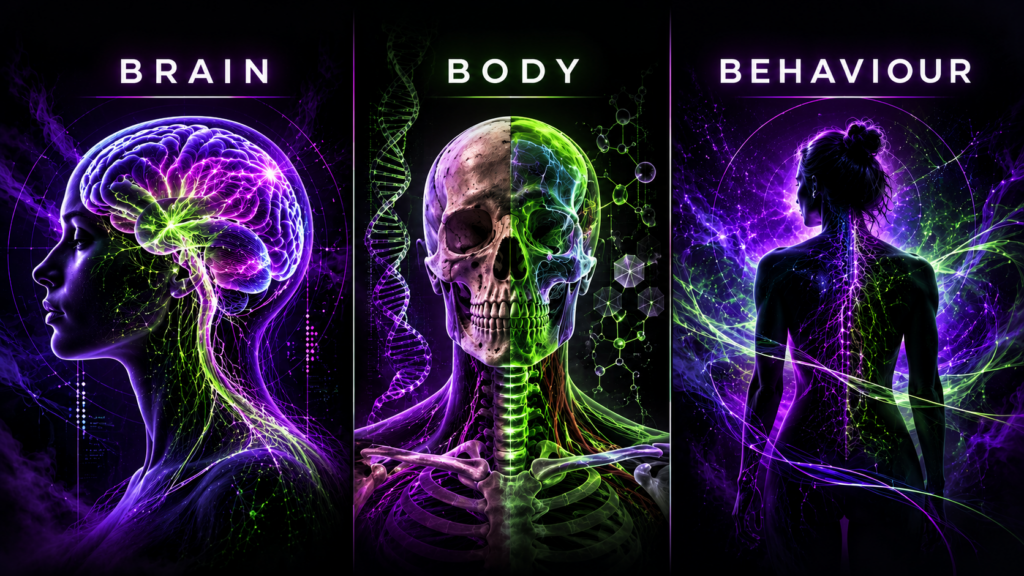
Midlife is not one biological event. The brain, body and our experiences continue to interact and change throughout adulthood. These are some of the connections worth exploring.
01 // BRAIN
The adult brain remains capable of change. Learning, experience, movement, sleep and health can all influence how neural systems function over time. Neuroplasticity does not mean the brain can simply be rewired on command. It describes its continuing ability to adapt to experience, injury and changing demands.
NEUROPLASTICITY • MEMORY • ATTENTION02 // BODY
Hormonal changes matter, but they are only one part of midlife biology. Metabolism, muscle, bone, cardiovascular health, sleep and other physiological systems also change across adulthood. These systems do not operate independently, which helps explain why the experience of midlife can vary so much between people.
HORMONES • METABOLISM • MUSCLE • SLEEP03 // BEHAVIOUR
How we think, feel and behave emerges from an ongoing interaction between the brain, body, environment and experience. Stress, relationships, movement, food, sleep, learning and the environments we live in can influence our biology. At the same time, changes within the body can affect mood, attention, motivation and behaviour.
STRESS • HABITS • EMOTION • ENVIRONMENTCORTEX CANNIBAL // UNDER THE SURFACE
A closer look at some of the mechanisms researchers are studying beneath everyday brain and body function.
The brain depends on a continuous supply of oxygen and nutrients delivered through the cardiovascular system. Researchers continue to investigate how blood flow, vascular health and physical activity interact with cognition and brain health across adulthood.
Sleep is an active biological state. During sleep, patterns of neural activity, cerebrospinal fluid movement and waste clearance change. The glymphatic system is one part of this emerging area of research into how the sleeping brain maintains itself.
The brain is metabolically demanding, and its cells rely heavily on mitochondria to produce usable energy. Scientists are studying how mitochondrial function interacts with metabolism, physical activity, cellular stress and the biology of aging.
CORTEX CANNIBAL // QUESTIONS WORTH ASKING
Midlife comes with plenty of assumptions, advice and noise. The biology is more interesting than the clichés.
THE POINT ISN'T TO FEAR CHANGE
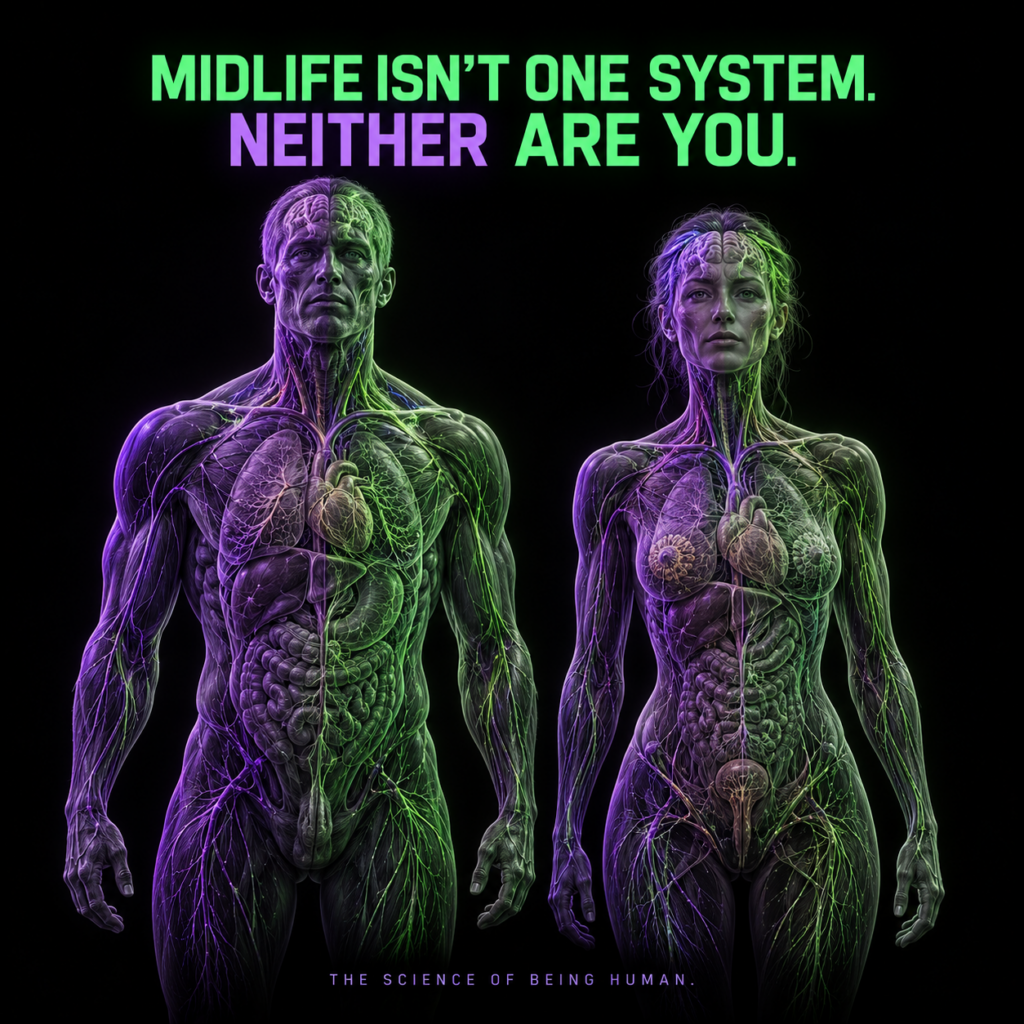
Midlife is not one hormone, one symptom or one biological event. It is a period of change across interconnected systems, with plenty still left for science to understand.
MIDLIFE GOT OUR ATTENTION.
THE SCIENCE KEPT US HERE.
STAY WIRED. STAY AWAKE. STAY HUMAN.
— MARSDEN RIDLEY
This content is for educational and informational purposes only and is not intended as medical advice. Always consult a qualified healthcare professional before making changes to your diet, lifestyle, or supplement routine. Some product mentions may include affiliate links once partnerships are active. If you purchase through those links, Cortex Cannibal may earn a small commission at no extra cost to you. This helps keep the research, writing, and design independent and ad-free. Read the full Disclosure & Disclaimer.