
Running on Cortisol and Spite.
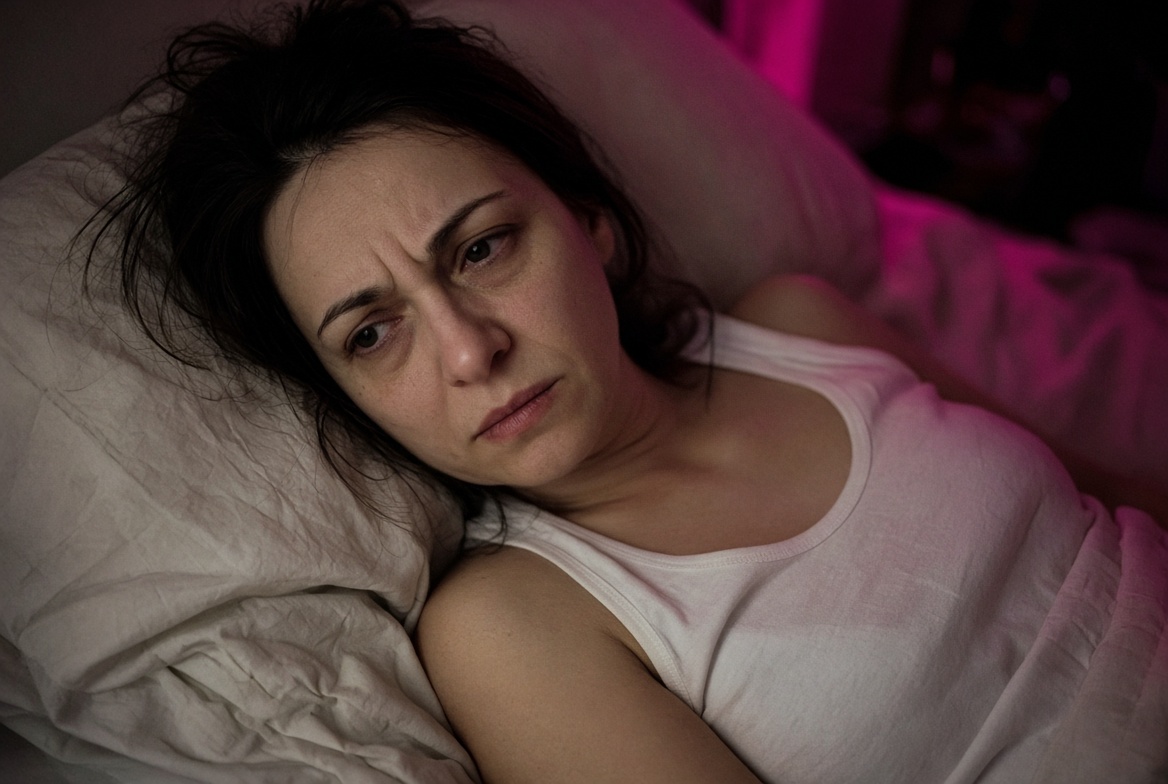
It's 11:47 p.m. You've been exhausted since about two in the afternoon. Now you're in bed, eyes open, mentally calculating how many years you have left before you can reasonably stop giving a shit. Is this perimenopause, an existential crisis, or just a perfectly reasonable reaction to everyone else's bullshit?
You know the type. Maybe you are the type. She works, manages a household, keeps track of everyone's appointments, answers the 9 p.m. "quick question" text, and somehow still remembers the dog's birthday. Ask her how she's doing and she says "fine," which is midlife for "held together with caffeine, cortisol and spite."
And for a surprisingly long time, that arrangement works. You get things done, remember what everyone else forgot, and keep functioning despite being exhausted. Until your patience disappears, your concentration takes an unscheduled vacation, and sleep becomes something other people apparently enjoy. Cortisol and stress in midlife women are connected, but the relationship becomes especially relevant when perimenopause enters the picture.
Explore the article
Your Brain Has an Alarm System. It Doesn't Have a Calendar.
Cortisol is produced by your adrenal glands and helps regulate metabolism, energy availability, and your response to stress. Its release is coordinated by the hypothalamic-pituitary-adrenal axis, or HPA axis. When your brain perceives a challenge, this system sends signals that help your body respond. Excellent when something genuinely requires immediate attention. Less convenient when the challenge is an overdue bill, seventeen unfinished tasks, or someone asking what's for dinner while you're visibly making dinner.
Inside the Stress Response
Simplified HPA-axis signalling. Cortisol also participates in feedback regulation.
Neuroendocrinologist Bruce McEwen described how repeated stress can contribute to allostatic load, the cumulative physiological burden associated with adapting to ongoing demands. [1] Chronic stress doesn't necessarily mean cortisol stays permanently elevated. Stress responses can change in different ways, and cortisol levels fluctuate naturally. The difficulty is that recovery becomes harder when the demands never seem to stop.
Then Your Hormones Rearrange the Furniture.
As though midlife needed another plot twist, estrogen and progesterone begin fluctuating during perimenopause. These hormones interact with systems involved in sleep, mood, temperature regulation, and stress responses. In the Seattle Midlife Women's Health Study, researchers observed cortisol increases among some women during the later stages of the menopausal transition. [2] That doesn't mean perimenopause automatically causes high cortisol, but it suggests that reproductive hormones and stress regulation may influence one another.
So the responsibilities you managed at 32 might feel very different at 47. Your sleep becomes less predictable, your tolerance for nonsense decreases, and suddenly you're standing in the kitchen wondering why you came in there. Not every frustrating moment is hormonal. Sometimes people really are being annoying. But your biology may be contributing to how you're experiencing it.
Tired All Day. Wide Awake at Midnight.
One of the more insulting features of stress is being completely exhausted while remaining spectacularly awake. Cortisol normally follows a daily rhythm, generally rising toward morning and declining throughout the day. Sleep deprivation can affect that regulation. A small laboratory experiment involving healthy young men found that sleep loss increased cortisol the following evening. [3] The results don't establish what happens in every midlife woman, but they demonstrate that sleep and stress-hormone regulation are connected.
Illustrative only. This is not measured cortisol data or a diagnostic reference range.
Add night sweats, racing thoughts, or the anxiety of watching the clock, and bedtime can become its own stressful event. You're tired because you didn't sleep, worried because you're tired, and now worried about whether you'll sleep again. It's an absolutely ridiculous feedback loop, and one that may need more than another suggestion to put your phone away. If nighttime anxiety is becoming a regular visitor, we've also explored why perimenopause can leave you wide awake at 3 a.m., including why a racing heart doesn't automatically mean your cortisol is high.
The Cravings, the Brain Fog, and the Missing Patience.
Stress can influence appetite, memory, and concentration, although cortisol isn't responsible for everything. In a laboratory study of 59 premenopausal women, those with stronger cortisol responses to stress consumed more calories after a stressful session and tended to eat more sweet foods across the study days. [4] So when a miserable day ends with you eating chocolate chips directly from the bag, there may be biological factors contributing to the situation.
Stress can also affect brain systems involved in attention and memory, including the hippocampus and prefrontal cortex. [5] Meanwhile, research from the SWAN study identified changes in certain cognitive test performances during the menopausal transition. [6] None of this means forgetting someone's name proves your cortisol is elevated. But when stress, hormonal fluctuations, and poor sleep overlap, concentration can become considerably harder, which is reassuring when you've spent ten minutes searching for the phone you're holding.
Managing Stress Shouldn't Become Another Job.
Managing stress shouldn't become another exhausting responsibility. When you're already overwhelmed, the last thing you need is a complicated routine that requires more time, money, and mental energy than you have available. The basics aren't particularly glamorous, but they're worth protecting.
Sleep matters. Consistent sleep habits help, and persistent insomnia deserves proper assessment and treatment. If perimenopause symptoms are interfering with sleep, there are treatment options worth discussing with your healthcare professional.
Movement helps. Walking, strength training, or simply doing something physical you enjoy can support wellbeing. Not every workout needs to resemble a punishment for something you ate.
Recovery needs to be real. Sitting down while mentally organising tomorrow's responsibilities isn't always the same as switching off.
Sometimes the workload is the problem. You can't endlessly compensate for unrealistic demands with better breathing techniques. Rest shouldn't require reaching the point of complete exhaustion first.
Spite Is a Terrible Long-Term Energy Source.
There's something almost impressive about how much women can accomplish while running on empty, but functioning isn't the same as recovering. Cortisol isn't your enemy. It's part of a sophisticated system that helps your body respond to life's demands, and things become more difficult when stress is relentless, sleep is disrupted, and midlife introduces a few additional biological variables.
You don't need to eliminate cortisol or become exceptionally talented at managing the impossible. You need opportunities to recover, realistic expectations, and proper care when symptoms persist. Spite might get you through a rough Tuesday, but it shouldn't have to carry you through the next twenty years.

Running on Cortisol and Spite.
Because sometimes you can't fix the chaos, but you can dress appropriately for it. Inspired by the biology of being human and the questionable coping mechanisms that get us through the week.
Shop the Sweatshirt on Etsy